News
News
Health Minister Visit
Health Minister visits Foyle Hospice following landmark Committee report calling for full statutory funding of palliative care.

Health Minister visits Foyle Hospice following landmark Committee report
Health Minister Mike Nesbitt has visited Foyle Hospice in Derry~Londonderry, meeting patients, families and staff delivering specialist palliative care, two months after the Health Committee published its inquiry report calling for hospices to move to 100% statutory funding.
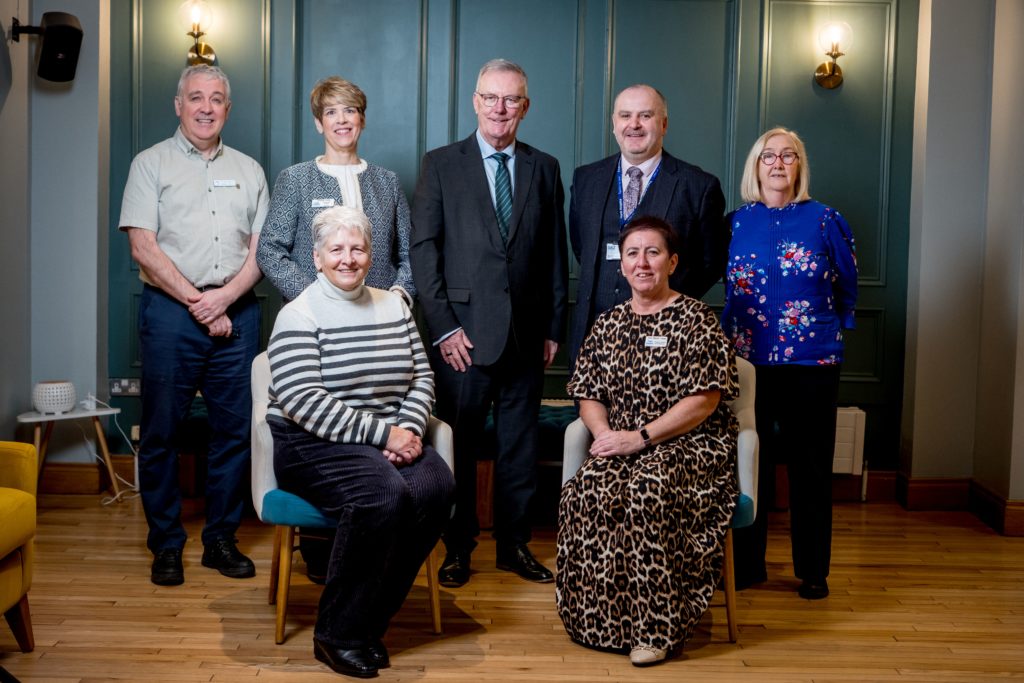
The Minister was welcomed by Donall Henderson, Chief Executive, alongside the senior management team and Paddie Blaney, Vice Chair of the Board. The visit follows the Committee’s December 2025 report which found that palliative care in Northern Ireland is fragmented, under-resourced and lacking strategic leadership, and recommended the Department move to 100% funding for all hospice services, with an initial 50% of actual cost of care for 2026-27, rising on a sliding scale over five years.
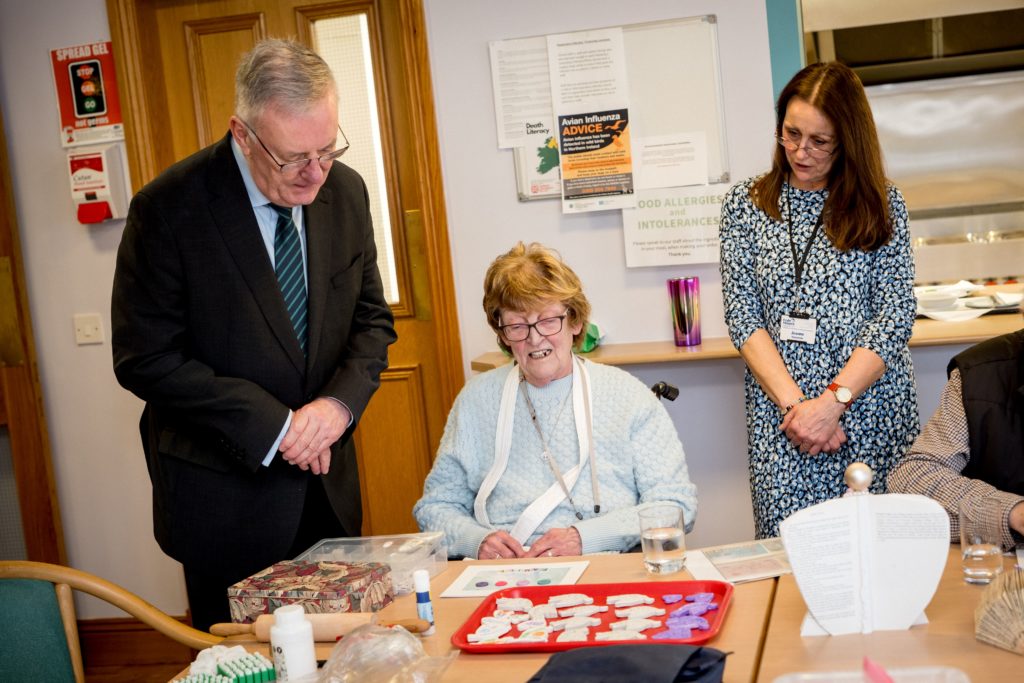
During the visit, the Minister spent time in the inpatient unit speaking with patients receiving specialist symptom management and end-of-life care, before meeting service users in day therapy accessing holistic support including clinical assessment, complementary therapies and bereavement counselling. The hospice serves the Western Trust area from Limavady to Enniskillen, providing care in people’s homes, in the community, and through its 9-bed inpatient unit.
The visit takes place as the Minister progresses his neighbourhood model of care, a cornerstone of the Reset Plan published last July, with specialist palliative care identified as central to the shift towards community-based support that can reduce pressure on acute hospital services.
Donall Henderson, Chief Executive, said:
“The Health Committee’s report in December provided clear evidence that the current funding model is unsustainable and called for strategic reform. Foyle Hospice has provided over 40 years of care, shaped and sustained by our community, but as the Committee heard, hospices across Northern Ireland rely on charitable fundraising for the majority of running costs, a model that limits our capacity to plan, invest and respond to growing demand.”
The Minister’s Reset Plan sets out a vision for neighbourhood centred care with services delivered closer to home. Specialist palliative care at Foyle Hospice already delivers that vision in practice; supporting people to remain at home where possible, preventing avoidable hospital admissions, and providing coordinated care across community settings. Moving to sustainable statutory funding would allow hospices to become full partners in that reform agenda, enabling them to expand services, strengthen workforce, and deliver equitable access which the Committee identified as essential.”
AnnMarie Casey, Director of Nursing and Clinical Care, said:
“The Committee heard evidence about gaps in service provision that we witness daily, limited out-of-hours access, inconsistency across geography, and communication breakdowns that leave families feeling unsupported. The Minister saw today what’s possible when specialist teams work seven days a week, delivering expert clinical care in the inpatient unit, through day therapy, and into people’s homes across both urban and rural communities.
“The data tells a stark story. The Committee’s report highlighted that 44% of people currently spend their final days in hospital wards, despite 80% expressing a wish to die at home or in a hospice. That gap represents both human cost and system inefficiency. Strengthening community based palliative care prevents crisis situations, supports families to cope, and reduces unnecessary hospital admissions, but delivering that consistently requires sustainable investment in workforce, clinical leadership and coordinated pathways across statutory and voluntary sectors.”
Dr Paul McIvor, Medical Director, said:
“As a consultant in palliative medicine who also works one day a week at Altnagelvin Hospital, I see directly how effective early palliative care intervention can prevent avoidable deterioration and reduce acute hospital admissions. The clinical pathway works best when specialist support is available promptly in the community managing complex symptoms, supporting advance care planning, and coordinating care across multiple services.”
The Committee’s report recognised that Northern Ireland remains the only part of the UK without a clinical lead for palliative care, and that absence is felt in the variability of services and outcomes. Effective palliative care responds early, supports people at home, and ensures seamless access when clinical needs change.
Working collectively through Hospice Alliance NI and alongside statutory colleagues, we can help deliver care that is both clinically excellent and financially responsible. That requires moving beyond year-to-year uncertainty towards the strategic, funded approach the Committee has recommended.”
Health Minister Mike Nesbitt said:
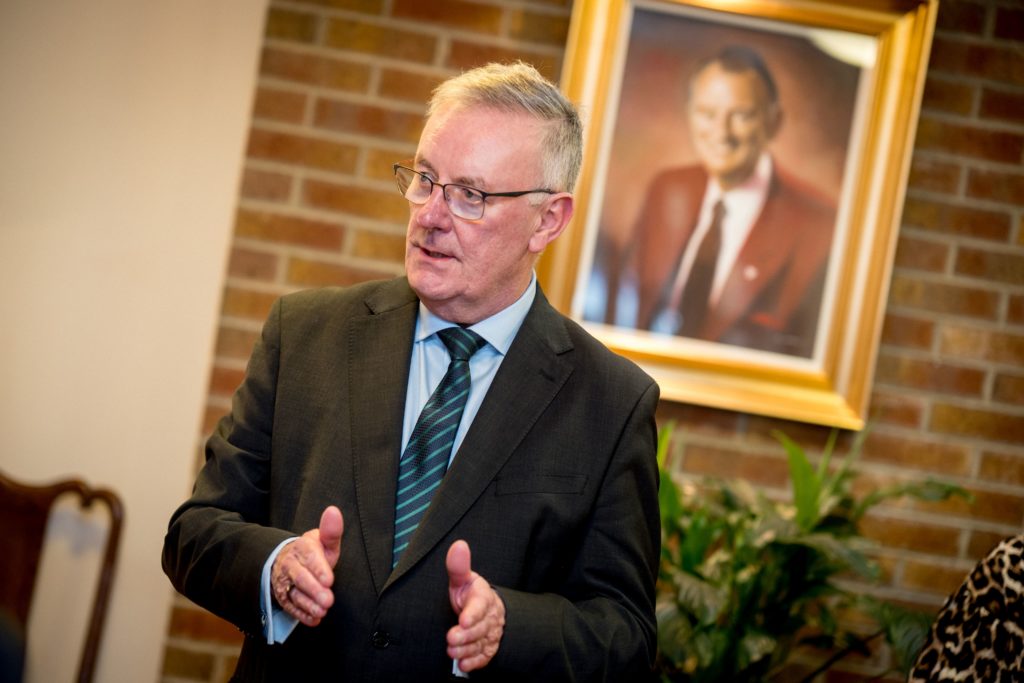
“I recognise the crucial work that Foyle Hospice does to provide support and care to those in need of palliative and end of life care. I very much valued the opportunity to meet staff, tour the facility, and talk to some of those using the hospice’s services.
“Palliative and End of Life Care will play a key role in the Neighbourhood Model of Care, a central tenet of my Reset Plan for health and social care. I believe our commitment to develop this model for primary; community and social care can support how palliative and end of life care is delivered, helping more people with palliative care needs to be looked after in their homes and in the community.”
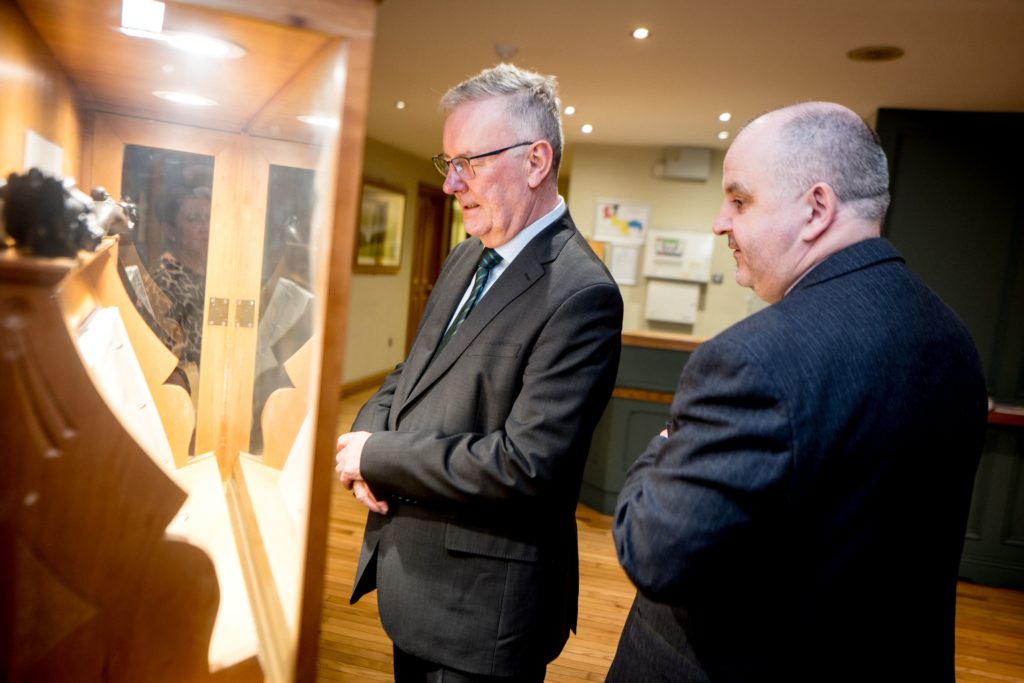
During the visit, the Minister paused at the memorial book in reception. Staff explained how this holds the names of patients, people who received care, loved ones who are remembered by families who return year after year to hospice to share memories and express gratitude. The pages represent four decades of compassion, clinical excellence, and community support.
As the Minister departed, he was presented with a card carrying the stories of people whose lives have been touched by Foyle Hospice. These are service users who have lived with dignity, families who have been supported through unimaginable grief, children who have been helped to understand loss.
There are many faces behind these statistics, the stories of lives behind the funding debate, the reason this conversation matters. With the right investment and partnership, that care can reach even more people who need it, when they need it most.